
Po Nagar Cham Towers
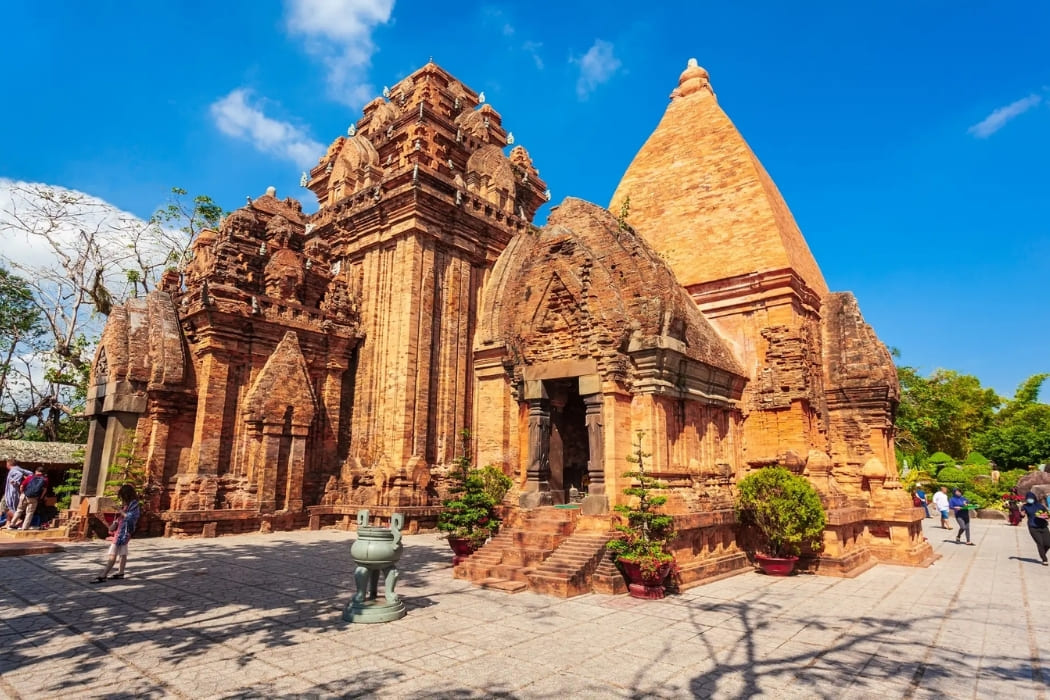
Po Nagar Cham Towers is one of the most important cultural and religious landmarks of the ancient Champa civilisation. Located on Cu Lao Hill beside the Cai River, the temple complex features historic brick towers, stone sculptures and inscriptions that reflect centuries of worship. Unlike a monument visited only for its historical value, Po Nagar Cham Towers remains an active sacred site where visitors can learn about Cham traditions and Vietnamese spiritual beliefs.
About Po Nagar Cham Towers in Nha Trang
-
- Location: 61 Hai Thang Tu, Bac Nha Trang, Khanh Hoa
- Opening Hours: 6 AM – 6 PM
- Distance from InterContinental Nha Trang: 4.4 km – 11 minutes
Po Nagar Cham Towers is a historic temple complex on Cu Lao Hill, north of central Nha Trang. Dedicated primarily to Goddess Po Nagar, the Mother Goddess associated with the land and prosperity, the sanctuary also contains towers linked to other Hindu deities. Its elevated position overlooks the Cai River and the surrounding urban landscape. The complex is arranged across different levels of the hill, with the remains of the entrance area, a columned Mandapa and surviving temple towers forming its principal architectural features. Visitors can explore the brick structures, examine historical inscriptions and observe the religious practices that continue at the sanctuary today.
The History of Po Nagar Cham Towers
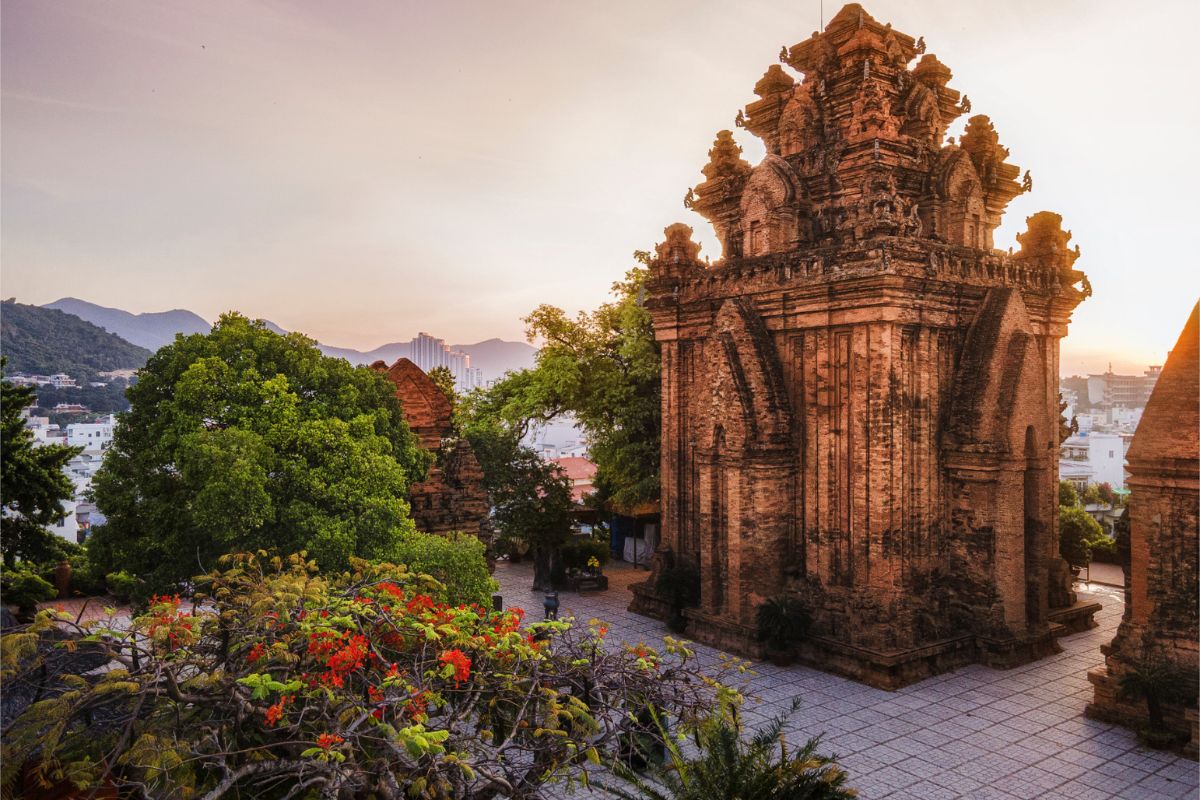
Po Nagar developed as a major religious sanctuary of the ancient Champa civilisation, with construction and restoration taking place over several centuries. Inscriptions discovered at the site record temple building, repairs, offerings and worship, providing valuable evidence of the political and religious life of the Cham kingdom. Over time, Vietnamese communities continued worship at the site through the tradition of Thiên Y A Na, identifying the goddess with a revered Mother Goddess figure. This continuity makes Po Nagar more than an archaeological landmark, a living place of worship where historical heritage and contemporary spiritual traditions meet.
The Beauty of Po Nagar Cham Towers
1. The Gate Tower
The original gate tower stood at the lowest level and marked the entrance to the sacred complex, although little of the structure remains today. Visitors can still follow the stone steps uphill towards the Mandapa, tracing the route that once guided worshippers towards the temple towers. The surviving layout offers a sense of the site’s original ceremonial approach.
2. The Vestibule (Mandapa)
The Mandapa occupies the middle level of the complex and served as a space for preparing offerings and conducting rituals before worshippers proceeded to the temple towers. Its rows of brick columns create an open architectural arrangement that differs from the enclosed shrines above. National tourism descriptions give the structure approximate dimensions of 20 metres long and 15 metres wide.
3. The Temple and Tower Area (Kalan)
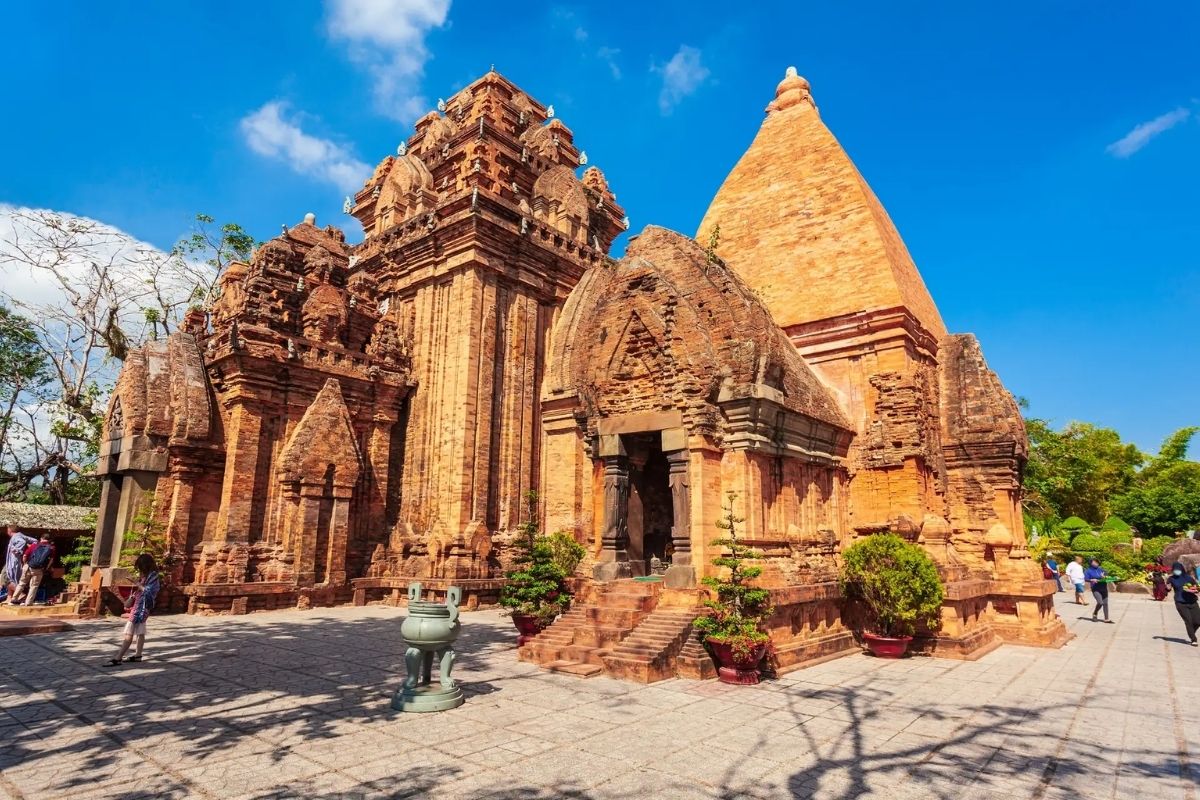
The upper level contains the surviving temple towers and forms the architectural highlight of Po Nagar. The main tower, dedicated to Goddess Po Nagar, stands out for its brick construction, terraced pyramidal roof and sculptural decorations. Inside, the sacred image of the goddess remains the focus of worship. The towers demonstrate the craftsmanship and religious symbolism of Cham architecture.
4. The Inscription Area
The inscriptions at Po Nagar preserve written records associated with the temple’s construction, restoration, deities, offerings and religious activities. Some inscriptions use Sanskrit, while others are written in Old Cham, providing evidence of the languages and cultural traditions used in the ancient sanctuary. For visitors interested in history, these inscriptions reveal how the complex developed beyond what its surviving architecture alone can explain.
How to Get to Po Nagar Cham Towers in Nha Trang
Po Nagar Cham Towers is approximately 2 km north of central Nha Trang, beside the Cai River. Travellers can reach the temple by car, bus or private transfer, with journey times and costs depending on their starting point and transport choice.
By Car
From central Nha Trang, follow Tran Phu Street north, cross Tran Phu Bridge and continue towards Thap Ba Street and Cu Lao Hill. The drive typically takes around 10–15 minutes, depending on traffic and your exact starting point.
- Distance: Approximately 2 km from central Nha Trang; around 2.7 km from InterContinental Nha Trang.
- Estimated travel time: 10–15 minutes from the central beachfront, depending on traffic.
- Route: Tran Phu Street → Tran Phu Bridge → Thap Ba Street → Po Nagar Cham Towers.
- Cost: Fuel and parking costs vary. If travelling by taxi or ride-hailing car, check the fare in your app before confirming the trip.
Visitors travelling by car should follow local parking signs near the temple and allow extra time during busy periods.
By Bus
Public buses offer a budget-friendly way to reach Po Nagar Cham Towers. Bus No. 4 is commonly cited as a route serving central Nha Trang and coastal tourist areas, although travellers should confirm its current route and nearest stop before setting out.
- Bus route: Bus No. 4, subject to current route and stop information.
- Estimated travel time: Allow approximately 20–30 minutes from central Nha Trang, including time to reach the stop and walk to the entrance. Actual journey times depend on the route and traffic.
- Fare: Approximately VND 10,000 per ticket as a reference; confirm the current fare before boarding.
- Alternative: Some sightseeing bus services include Po Nagar as a hop-on, hop-off stop, allowing visitors to combine the temple with other city attractions.
Check the latest bus timetable, route map and ticket conditions before travelling, as public transport services and fares can change.
By Private Car
A private car with a driver suits families, couples and groups who want flexibility when exploring northern Nha Trang. Arrange a hotel pickup and travel directly to Po Nagar before continuing to other attractions without needing to follow a public bus timetable.
- Distance: Approximately 2.7 km from InterContinental Nha Trang.
- Estimated travel time: Around 10–15 minutes from the hotel, depending on traffic.
- Route: The driver can follow Tran Phu Street north, cross Tran Phu Bridge and continue towards Thap Ba Street.
- Cost: Depends on the vehicle, booking duration and whether you arrange a one-way transfer or a private car for several hours. Request a quote from the hotel concierge or transfer provider before departure.
For guests staying at InterContinental Nha Trang, Po Nagar Cham Towers is only a short distance from the hotel, about 2.7 km.
The Best Time to Travel to Po Nagar Cham Towers
The dry season, generally from January to August, is a practical period for visiting Po Nagar Cham Towers. For a more comfortable walk around the outdoor complex, plan to arrive early in the morning, ideally between 7:00 AM and 9:00 AM, when temperatures are usually cooler and the site is less exposed to the midday sun. Travellers interested in local religious traditions should also consider visiting during the Po Nagar Festival. The festival follows the lunar calendar, so its dates change each year. Check the festival schedule for your travel year before planning your visit. Travellers should check Nha Trang weather to find the best time to travel to attractive destinations.
Travel Tips when Visiting Po Nagar Cham Towers
A little preparation helps visitors explore Po Nagar respectfully and comfortably while appreciating its historical and religious significance.
- Dress respectfully: Po Nagar is an important religious and cultural site, so wear clothing that covers the shoulders and knees where possible. Avoid beachwear when entering the temple area.
- Visit in the morning or late afternoon: These periods are generally more comfortable for walking around the outdoor complex and taking photographs, particularly during warmer months.
- Wear comfortable footwear: The site includes steps and different levels, so comfortable walking shoes or sandals will make it easier to explore the complex.
- Bring water and sun protection: Much of the visit takes place outdoors. Bring drinking water, sunscreen, sunglasses and a hat, especially if visiting around midday.
- Check opening hours before visiting: Opening information can differ between travel sources, so travellers should confirm the latest hours before departure rather than relying on an older guide. Current secondary sources list different opening times.
- Carry some cash: Having Vietnamese dong available is useful for entrance fees and small purchases, although travellers should verify the current ticket price before visiting.
By following these simple tips, visitors can explore the towers with greater comfort while respecting the traditions that keep this historic sanctuary active.
Return Towards The Central Beachfront After The Visit.
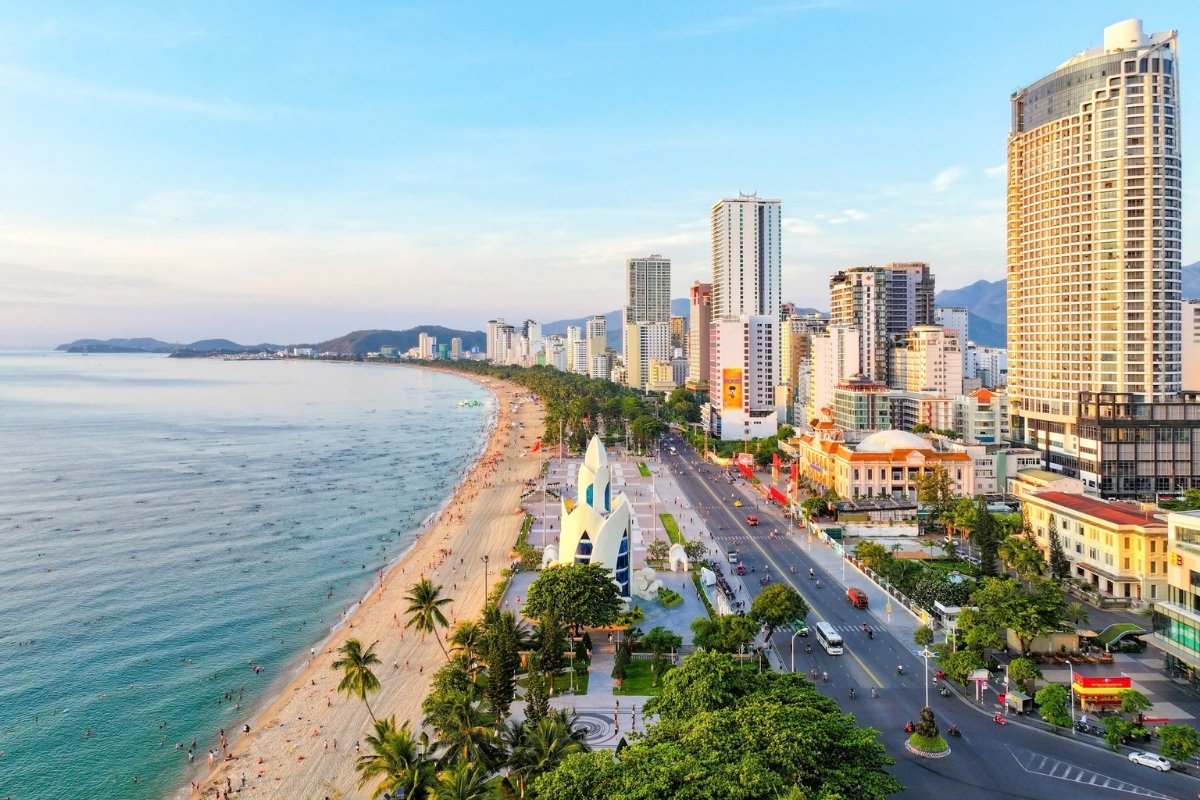
After exploring Po Nagar Cham Towers, return to central Nha Trang to enjoy its beachfront scenery, cultural landmarks and local dining. The central Tran Phu area provides a convenient base for relaxing after a morning of sightseeing. InterContinental Nha Trang places travellers along Tran Phu Beach, within easy reach of Nha Trang’s cultural attractions, shopping areas and seaside experiences.
- Alexandre Yersin Museum – Approximately 600 metres from the hotel, this museum explores the life and scientific contributions of Alexandre Yersin, the French-Swiss physician and researcher closely associated with Vietnam. It is a convenient stop for travellers interested in the history of science and medicine.
- Nha Trang Cathedral – Around 1.4 km from the hotel, this hilltop Catholic church features French Gothic architecture, stone construction and colourful stained glass. Its elevated position offers a different perspective on the city’s architectural heritage.
- Long Son Pagoda – Approximately 2.3 km from the hotel, this Buddhist temple is known for its large white Buddha statue and hillside setting. Visitors can explore the temple grounds and learn more about Buddhist traditions in Nha Trang.
For a longer Nha Trang escape, travellers can also consider the Extend A Night On Us offer. The current promotion provides one complimentary night for every three consecutive nights booked, with daily breakfast for two and access to hotel facilities included, subject to the offer’s terms and availability.
FAQs about Po Nagar Cham Towers
1. What Is Po Nagar Cham Towers Famous For?
Po Nagar Cham Towers is famous for its ancient Cham brick architecture, religious sculptures and historical inscriptions. Dedicated primarily to Goddess Po Nagar, the complex preserves the spiritual heritage of Champa and remains an active place of worship in Nha Trang.
2. How Old Are the Po Nagar Cham Towers?
The sanctuary dates back to the early centuries of the second millennium, with surviving structures and inscriptions reflecting several periods of construction and restoration. Its architectural history spans centuries, so the complex does not have one single construction date.
3. How Much Is the Entrance Fee to Po Nagar Cham Towers?
The entrance fee depends on the current ticket policy, and older travel guides sometimes quote outdated prices. Check the latest official or on-site information before visiting to confirm the admission fee and any applicable concessions.
4. How Far Is It From InterContinental Nha Trang to Po Nagar Cham Towers?
Po Nagar Cham Towers is approximately 2.7 km from InterContinental Nha Trang on Tran Phu Street. Visitors can travel by car or taxi, with the journey time depending on traffic. Check a navigation app on the day of your visit for the quickest route.